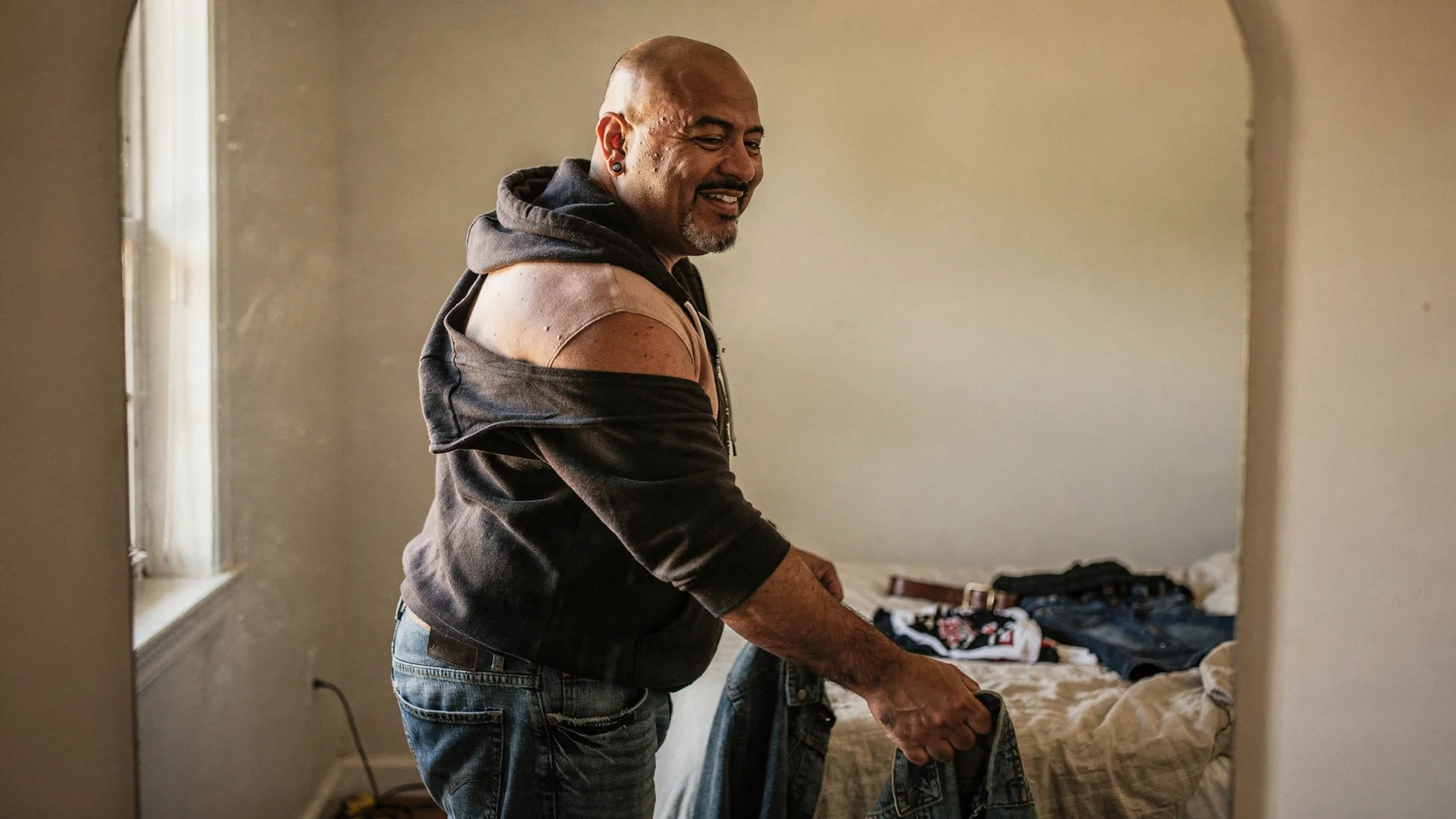
The Man Who Beat Obesity and Still Does Not Trust the Mirror
Losing weight is hard. Believing the new body is yours can be harder.
Educational content — see our editorial standards.
 Body
BodyReal shit: after major weight loss, the mirror can still act like an ex who knows exactly where to hurt you. You did the impossible thing. You lost the weight, real weight, the kind people notice at reunions. The shirts hang loose now, you punched a new hole in the belt, the numbers moved in every direction they were supposed to. And yet you stand in front of the mirror and some old voice still narrates the body of the heavier man who is not even there anymore. The scale changed months ago. The story in your head did not get the memo.
This is the part nobody warns you about, because everyone assumes the hard part was the losing. The losing was hard. But the losing had a clear enemy and a visible scoreboard and applause when the number dropped. What comes after has none of that. What comes after is a quiet, ongoing negotiation with an identity that is still catching up to a body it does not quite recognize. The physique arrived first. The man inside it is running late.
The body changed before the identity did
Identity does not move at the speed of fat loss. You spent years, maybe decades, being the big guy, the one who dreaded the folding chair, who sat out the group photo, who wore the jacket indoors. That was not just a body. That was a role, with lines and habits and a whole way of moving through a room. You can shed sixty pounds in a year. You cannot shed a decade of self-image on the same schedule. So you end up a lean man still flinching like a heavy one, still bracing for a comment that is not coming anymore.
It shows up in small, specific ways. You still reach for the biggest shirt on the rack out of pure reflex. You still angle away from windows and mirrors. You still hear the old jokes in your head when you sit down on a flimsy chair. The body sends no such signals anymore; your reflexes are just running old software, trained on a body that no longer exists. The lag is real, and it is not a sign the work failed. It is a sign the work is more than physical.
The Baseline Audit
Stop guessing what changed.
Ten questions on energy, sleep, weight, libido, recovery, stress, and goals — about three minutes. Then use the read to decide what to raise with a qualified clinician.
Take the Baseline AuditMaintenance feels like probation
Here is the trap almost nobody names. Maintenance does not feel like victory. It feels like probation. When you were losing, every week gave you a win and a reason. Maintaining gives you no applause and no finish line, just the daily job of not sliding back, forever, with a nagging fear that the whole thing is one bad month from unraveling. You are guarding a gain instead of chasing one, and guarding is a lonelier, quieter, less rewarded kind of work. No crowd cheers when you simply stay the same.
That is exactly why so many men who lose big regain it. Not because they are weak, and not because they wanted it back. Because they were never told that maintenance is its own distinct skill, with its own mindset, and they kept waiting for the finish line that maintenance does not have. They treated the goal weight as the end of the story. It was actually the start of a different, harder-to-see chapter that nobody had prepared them to live in.
The comeback is not the weight loss. The comeback is learning to live as the man who keeps going.
Why the fear of relapse is rational
Do not gaslight yourself about the fear. The worry that it could all come back is not irrational anxiety; it is an accurate read of the situation, because bodies do drift back toward old set points and old habits do have gravity. The fear is data, not weakness. The mistake is not having the fear. The mistake is what men do with it: either denying it until they are blindsided, or letting it curdle into a white-knuckle panic that makes every meal a moral test and every pound of normal fluctuation a five-alarm fire.
Neither of those survives the long haul. Denial gets you ambushed. Panic burns you out, because no one can live in high alert around food forever without eventually rebelling against the whole exhausting project. The fear is real and useful. It just needs a better container than dread. It needs structure, so it can do its job without running your life.
Build systems, not panic
The answer to a rational fear is not more willpower. It is architecture. Systems are what turn a fear into a manageable background process instead of a daily crisis. A regular weigh-in rhythm so you catch drift at three pounds instead of thirty. Default meals you do not have to relitigate every day. Movement that is scheduled, not decided in the moment when you are tired and the decision will lose. Sleep protected like it is part of the plan, because it is. Systems mean you do not have to feel motivated every single day for the thing to hold. The structure holds it for you.
Some of maintaining a big loss is genuinely medical, and it is worth saying that out loud. Appetite, metabolism, and the way your body defends its old weight are real physiological forces, not just tests of your character, and they are worth an honest conversation with a qualified clinician who can help you think about the long game. You are not weak for finding maintenance hard. It is objectively hard. Give it the respect and the systems it deserves. The mirror will catch up eventually. Until it does, do not wait for it to feel true; keep living like the man who keeps going, and let the belief arrive late, the way it always does.
Sources
- Obesity health topic — MedlinePlus (NIH)
- Exercise and physical fitness — MedlinePlus (NIH)
This article is educational and is not medical advice. If you are dealing with libido changes, ED, blood sugar concerns, hair loss, weight gain, pain, or recovery issues, talk with a qualified clinician before starting any treatment. See our editorial standards.
Byline
Ray Santos
Metabolic Health Writer
Covers blood sugar, weight maintenance, labs, energy, and the health signals men avoid until they get loud.
More from Ray Santos →The Second Half Brief
More on body, weekly.
One raw email a week — no spam, no miracle claims. Or see what the Brief is.
Write to us
Letters from the Bench
Been through a version of this? Reply with your story and we may run it in a future Letters from the Bench feature. Nothing gets published without your explicit permission, and anything we run is anonymized.
Send your story