Two Peaceful Homes, One Guilty Dad
You can know the divorce was necessary and still feel like you handed your kids a childhood they did not ask for.
Educational content — see our editorial standards.
 Fatherhood
Real shit: doing the right thing can still feel like committing a crime against the family you wanted.
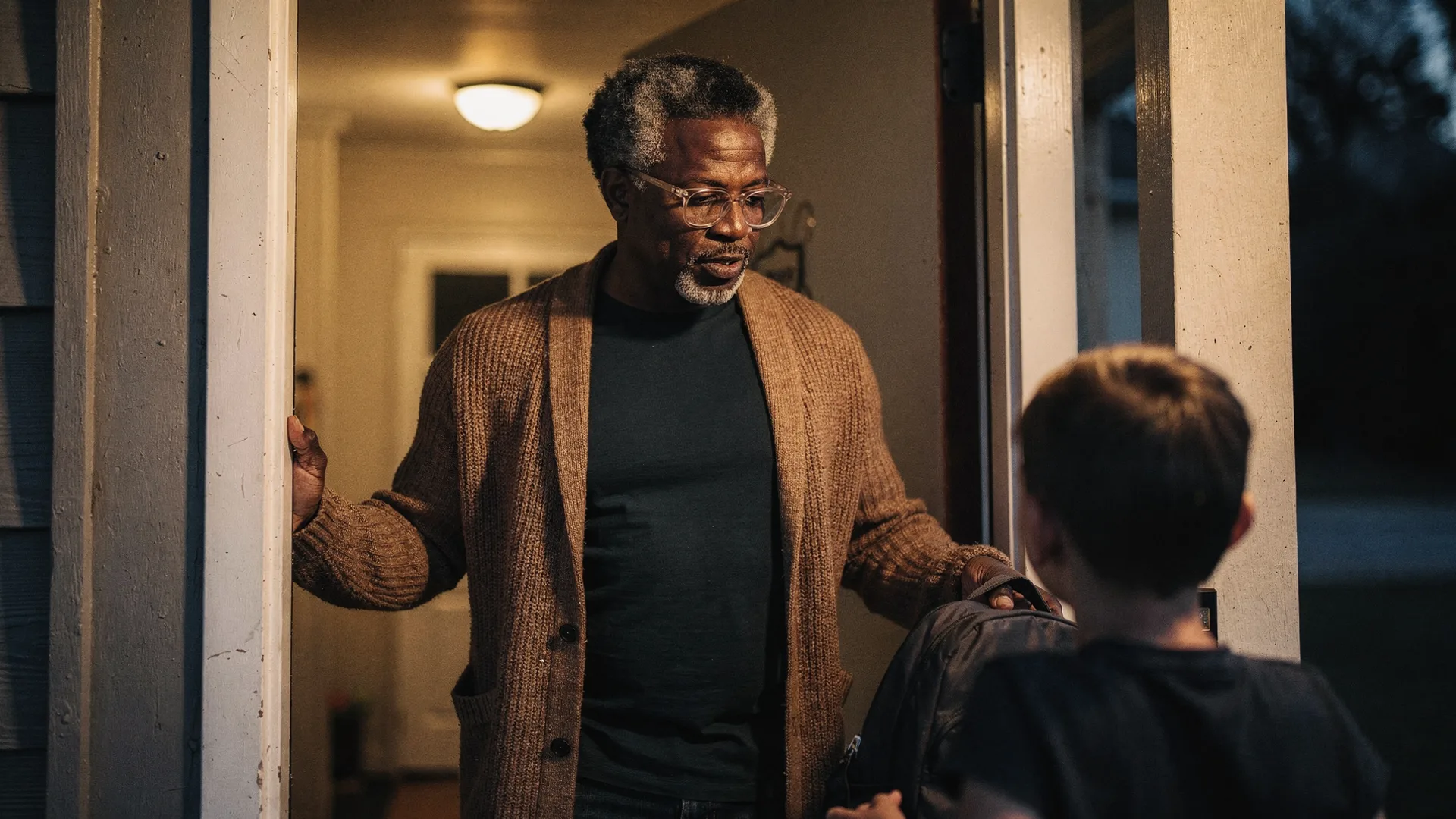
It ambushes you at the doorway. You hand your kid the backpack, they walk to the other car, and they turn and wave — happy, fine, a little tired — and it guts you anyway. Because in that one wave you see the whole architecture of it: two front doors now, two toothbrushes, two beds, a childhood split down the middle into your-week and her-week. They adjusted. That is the part that hurts most. They adjusted to a thing you swore they would never have to, and their resilience feels like an accusation even though it is actually a mercy.
The guilt that logic cannot touch
You have run the argument a hundred times and you win every round. The house was tense. The kids were absorbing a marriage that had gone quiet and cold. Two calmer homes beat one home with a fight humming under the floorboards. You know all of it, and none of it turns the guilt off, because guilt is not an argument — it is a feeling, and feelings do not care that you are technically correct. You can be right and still ache. Those two things sit in the same chest and neither one cancels the other.
So stop demanding that logic evict the guilt. It will not. What you can do is stop letting the guilt run your parenting, because a father steering from guilt makes bad calls — he overbuys, he under-disciplines, he becomes a nervous entertainer terrified of one bad weekend, and kids can smell that fear a mile off.
The Baseline Audit
Stop guessing what changed.
Ten questions on energy, sleep, weight, libido, recovery, stress, and goals — about three minutes. Then use the read to decide what to raise with a qualified clinician.
Take the Baseline AuditWhy the peace is the whole point
Here is what a kid actually clocks, and it is not the square footage or whether both parents are under one roof. It is the temperature of the room they are standing in. A child raised in one house full of clenched jaws and slammed cabinets carries more damage than a child who has two calm houses and a dad who does not badmouth their mom in the truck. The peace you built is not a consolation prize. It is the actual gift. You did not steal their childhood. You changed its blueprint so the walls stopped shaking.
Your job is not to un-divorce the family. It is to stop bleeding on the childhood that still exists.
Read that guilt as information, not as a sentence. It is telling you that you love them and that you take the weight of their world seriously. That is a good signal coming out sideways. The move is to point it forward — into the hours you actually have — instead of letting it pool into a shame that makes you a smaller, jumpier version of their father.
What they need from you now
Kids of divorce are not asking you to fix the split. They are asking a quieter question, over and over: is my dad okay, and is his house safe. They need your week to be predictable — same dinner rhythm, same bedtime, the same dumb Friday tradition every single Friday. Predictability is how a kid's body learns that the ground under the new arrangement will hold. They do not need a theme park. They need a floor that does not move.
They also need you not to make them carry your feelings. No leaning on your ten-year-old for emotional support, no turning pickup into a referendum on their mother, no long sighs that make them feel responsible for your Sunday-night quiet. Handle your grief with adults so your kids get to just be kids in your kitchen.
Become the house that holds
Aim to be the stable house — not the fun house, not the guilt-gift house, the stable one. That is a project you build with unglamorous repetition: you show up on time, you keep your word about the small stuff, you stay steady when they test whether the new setup is real. And steadiness runs on your own reserves, which means your sleep, your mood, and your energy are not side issues — they are load-bearing. Run yourself into the ground and the calm house you are trying to be starts to wobble.
Here is the reframe that finally lets a guilty dad breathe: your kids will not remember the divorce as a single catastrophe. They will remember ten thousand ordinary moments, and most of those moments have not happened yet. The pancakes this Saturday. The way you handle the flat tire without losing it. Whether your house feels like a safe place to land or a place where Dad is quietly falling apart. You are still writing the largest part of their childhood, and the divorce is one chapter in it, not the whole book. The guilt wants you to believe the story already ended badly. It did not. The pen is still in your hand.
You cannot give your kids the intact family you pictured. That version is gone, and grieving it is honest work. What you can give them is a father who is present, level, and clearly okay in his own home — and for a kid, that turns out to be most of what stability ever was. The guilt means you care. Let it make you steadier, not smaller. Build the house that holds, and let the wave at the doorway be a goodbye, not a wound.
This article is educational and is not medical advice. If you are dealing with libido changes, ED, blood sugar concerns, hair loss, weight gain, pain, or recovery issues, talk with a qualified clinician before starting any treatment. See our editorial standards.
Byline
Mason Reed
Senior Editor, Second Acts
Writes about divorce, fatherhood, rebuilding confidence, and the emotional mechanics of starting over after 40.
More from Mason Reed →The Second Half Brief
More on fatherhood, weekly.
One raw email a week — no spam, no miracle claims. Or see what the Brief is.
Write to us
Letters from the Bench
Been through a version of this? Reply with your story and we may run it in a future Letters from the Bench feature. Nothing gets published without your explicit permission, and anything we run is anonymized.
Send your story