The Day Your Kid Stops Asking You to Play
It has been three Saturdays since your kid asked you to play. Here is the real reason dads end up watching from a chair, and the small way back in.
Educational content — see our editorial standards.
 Fatherhood
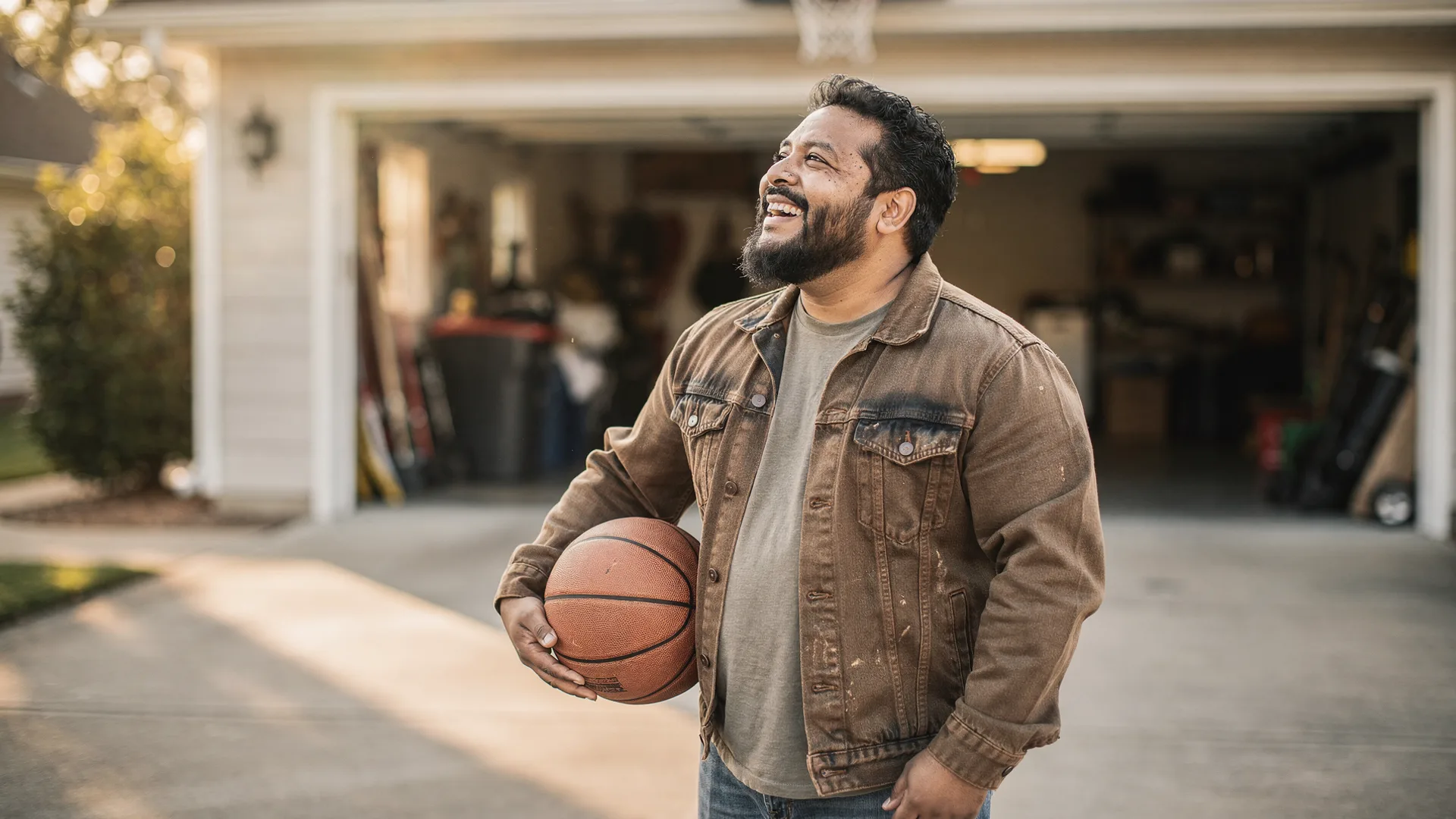
Real shit: the basketball has been in the same spot in the garage for three weeks, and last night you moved a bag of potting soil in front of it so you wouldn't have to make eye contact with a ball. It's dusk on a Saturday. Somewhere down the street another driveway has a game going — you can hear the rhythm of it, bounce, bounce, rim, laughter — and your son is inside watching a stranger play video games on a screen, and you are standing in your own garage losing a staring contest with sporting goods.
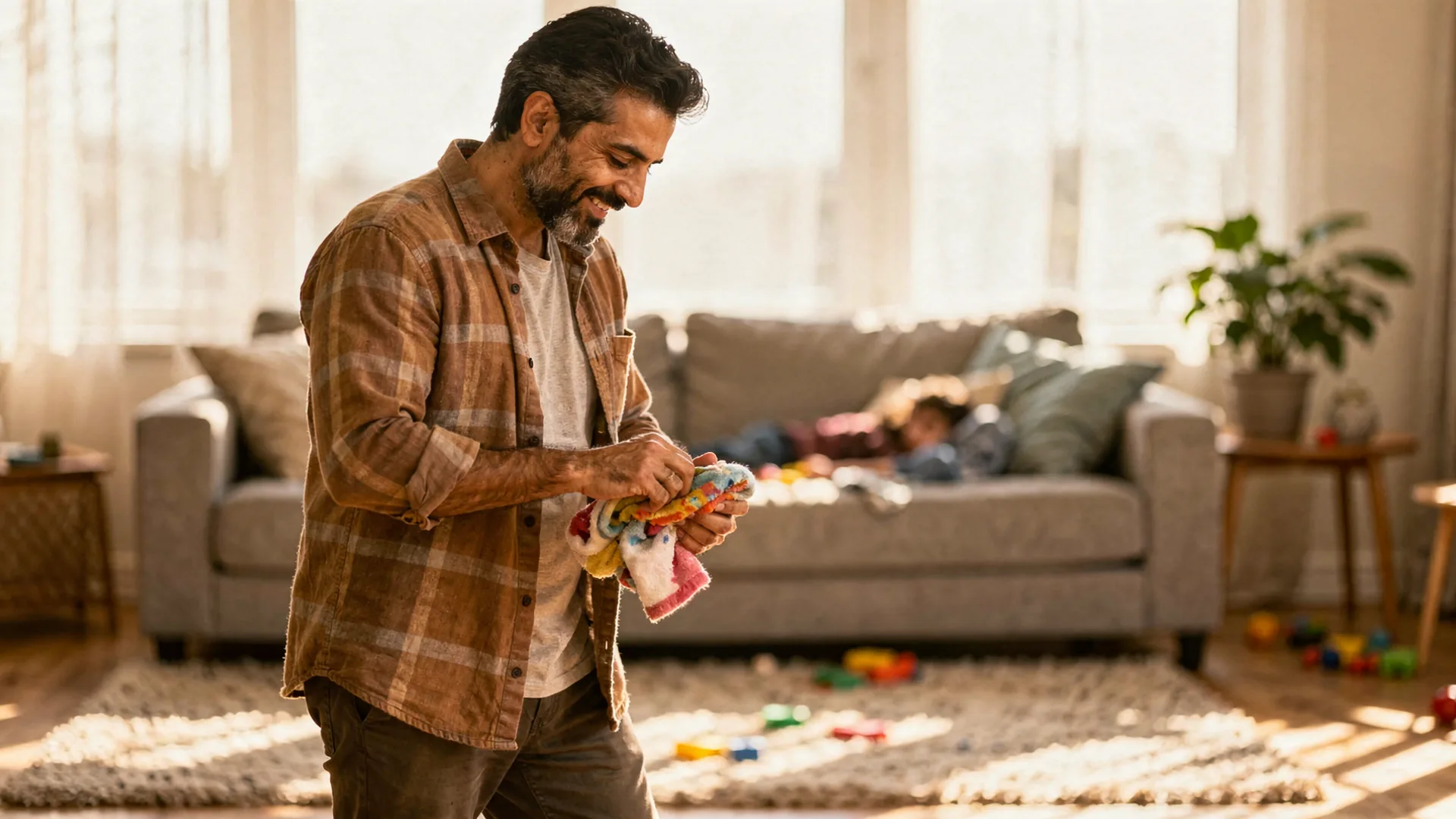
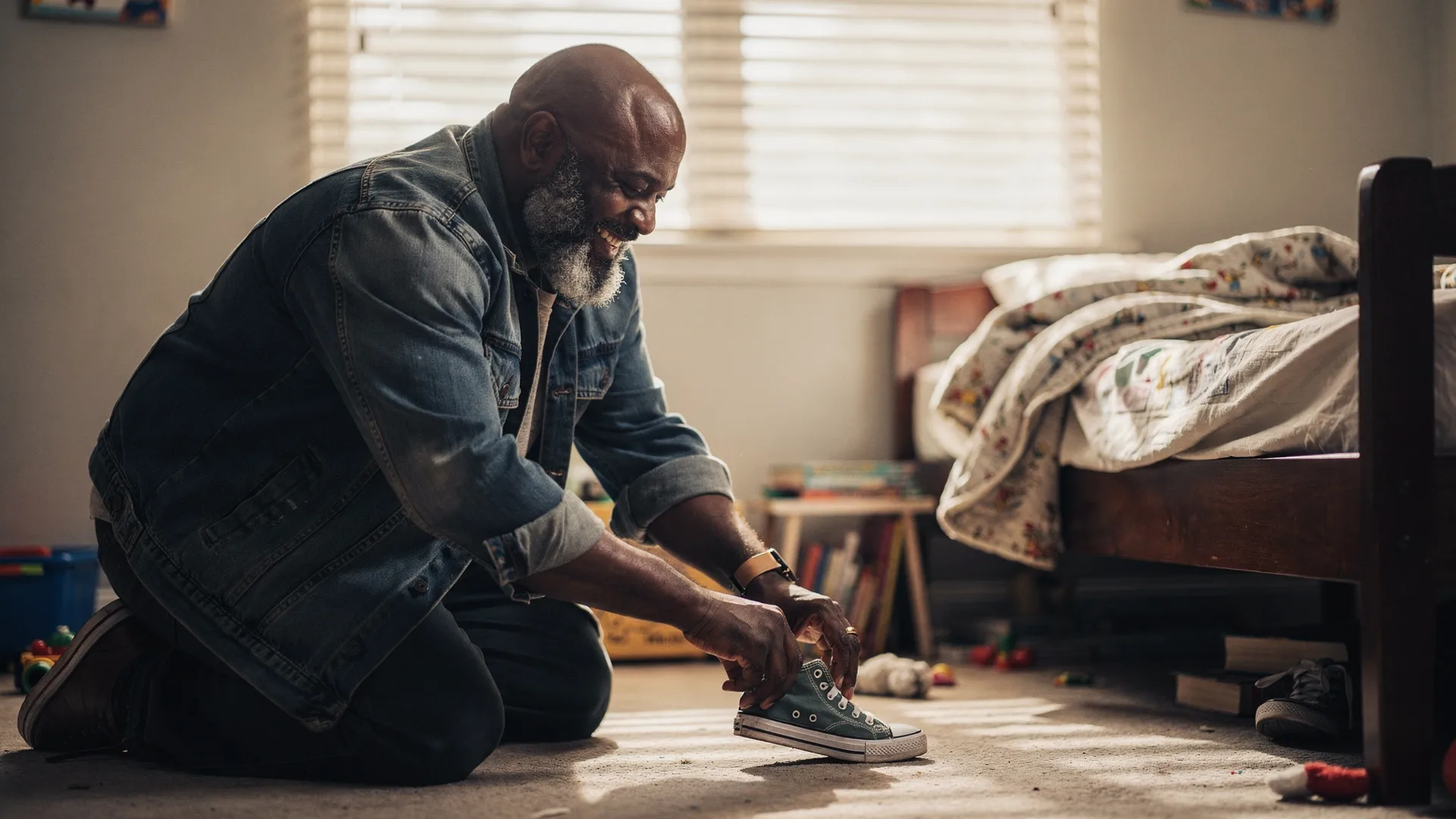
You didn't decide to stop playing with your kid. Nobody decides that. There was no retirement press conference in the kitchen. There was a Tuesday when your knees were barking and you said "not tonight, buddy." There was a Saturday when you were wiped from the week and said "maybe tomorrow." And then — this is the part that got you — there was a Saturday when he didn't ask.
He didn't ask.
The request just expired, quietly, like a coupon. And the silence where "Dad, wanna play?" used to live is now the loudest thing in your house.
If you're a dad who feels too tired to play with your kids, out loud you call it a phase. You tell people work has been brutal. You say he's getting older, kids pull away, it's developmental, you read something about it once. All of that might even be true. It is also a fog machine.
And because you've typed "why am I so tired" into a phone at midnight, the algorithm already has your number — the feed is a parade of "energy peptide" ads and testosterone content promising a father his spark back. Here's the honest split, which this article pays off in full below: real peptide-based medicine exists on the metabolic side of the house, no approved energy-in-a-vial exists anywhere, and what the peptide aisle can and can't do for energy is worth ten minutes of your reading before it gets ten dollars of your money.
Because here's the thing underneath the thing, the one you only visit at red lights: you are afraid you're becoming furniture. Present, load-bearing, technically useful, and decorative. A dad-shaped object in the house where a playmate used to live. You're afraid "tired" isn't a season you're passing through but a floor you've moved to, and the elevator is out. And the darkest version, the one you'd never say at a barbecue: you're afraid your son didn't stop asking because he outgrew the driveway. You're afraid he stopped asking because he got tired of the coin flip — and made peace with it. Built a little story where Dad doesn't do that anymore, filed it, moved on. Kids are terrifyingly efficient like that. The no's stopped hurting him because he stopped submitting the application.
That fear makes sense. It also runs on bad math, and the math is worth showing.
Why "too tired to play with your kids" is a signal, not a sentence
The enemy here isn't your son, your age, or your knees. It's two lies that always travel as a pair.
Lie one: presence equals participation. You've been in the room for everything — every practice, every recital, every screen-lit Friday night. You drive, you pay, you attend, you narrate encouragement from a folding chair. And somewhere along the way, attendance started counting as the whole job. It doesn't. A kid can feel the difference between a father in the room and a father in the game the way you can feel the difference between a handshake and a hug. Neither one is nothing. They are not the same thing.
Lie two: getting back in requires athlete-level fitness. This is the one that keeps the ball behind the potting soil. Some part of you decided that playing with your kid again is a thing you'll do after — after you drop the weight, after the knees calm down, after some montage you keep not starting. "I'll play with him when I'm in shape" is a loan you keep refinancing. The balance never goes down and the kid keeps aging.
Put the two lies together and you get a man who watches his own family like prestige television. Great seats. No lines.
And the chair deserves special mention, because the chair is where the two lies hold their meetings. The folding chair at practice. The camp chair on the sideline. The recliner with a sightline to the driveway. Nobody hands a man that chair — he backs into it, one reasonable excuse at a time, until sitting is simply his position. Understand: your son has never once looked at that chair and thought lazy. But he has absolutely looked at it and learned where you live now. Kids map their parents the way sailors map a coastline — by where you reliably are. Move where you reliably are, even ten feet, and the whole map gets redrawn.
Here's the reframe, and it's almost insultingly simple: your kid is not auditioning you for a team. There is no combine. He doesn't want a point guard. He wants ten minutes of your actual attention with your heart rate slightly elevated. The bar you've been afraid to clear is lying on the ground.
Why did my kid stop asking me to play? Usually it isn't rejection — it's pattern recognition. Kids quietly stop asking when the answer has been "later" or "not tonight" often enough that asking feels pointless. They adapt fast and without ceremony. The fix isn't an apology speech. It's you initiating small, low-stakes play, consistently, until the pattern rewrites itself.
That answer is the whole strategy. Now the tactics.
The Baseline Audit
Stop guessing what changed.
Ten questions on energy, sleep, weight, libido, recovery, stress, and goals — about three minutes. Then use the read to decide what to raise with a qualified clinician.
Take the Baseline AuditThe way back in starts smaller than your pride wants
Open with two minutes, not twenty. Your comeback game should be short enough to feel almost dumb. Two minutes of HORSE. Ten throws of a football. One lap of catch around the yard. You are not building fitness yet; you are rebuilding the ask. End it before you're gassed, while it's still fun, so both of you want the sequel.
You initiate. Do not wait to be asked again. He retired the question to protect himself. It's not coming back on its own. The script, delivered casually while walking past his room, not as a summit: "Hey. Garage. Two-minute game of HORSE. Loser takes out the trash." The stakes do the work — kids can't resist a wager, and the brevity tells him this isn't a Big Emotional Thing he has to manage.
Rig it to repeat. One-off redemption games change nothing. Pick a slot that already exists in the week — Saturday before dinner, Sunday after breakfast — and let it calcify into a ritual. Rituals don't need energy or a decision. That's the whole point of them.
Trade intensity for consistency. A walk while he tells you about his game counts. Throwing a ball while dinner cooks counts. Shooting free throws badly counts double, because losing to your kid with good humor is its own kind of gift. You're not training for anything except being someone he plays with.
Fix the fuel quietly, in the background. The dusk version of you — the one who has nothing left at 6 p.m. — is mostly built between 9 p.m. and midnight. The late drink, the doom-scroll, the sleep you treat as negotiable. Move one of those levers this week. Not all three. One. A short daily walk and a hard bedtime will do more for Saturday's game than any product ever marketed to tired fathers.
If the tank is empty for months, get it looked at. Persistent, unexplained fatigue — the kind that doesn't lift with a good week of sleep — is worth an honest conversation with a clinician. Sleep, mood, medications, blood pressure, blood sugar, pain: boring, checkable things. Being tired all the time is common. It is not mandatory.
The chair is not a stage of life. It is a decision you can still unmake, ten feet at a time.
Where peptides fit here — and where they don't
Time to pay off the earlier promise, because the peptide aisle splits cleanly in two. On one side: FDA-approved prescription medicines — the incretin (GLP-1) class — with real evidence for specific metabolic conditions such as type 2 diabetes and chronic weight management. If excess weight and a diagnosed condition are part of what parked you in the chair, that's a legitimate conversation to have with your doctor, and it's the one place "peptide" and "getting back in the game" honestly intersect. On the other side: compounds marketed for "energy," "vitality," and "recovery" that are investigational at best — no approval for any of those uses, and essentially no human evidence behind the promises. That isn't caution talking; that's just what the record currently shows.
And notice that neither side of the aisle touches the actual physics of your Saturday. The dusk tank is built by sleep, movement, and whatever a basic checkup turns up — boring levers, embarrassingly effective, mostly free. The ball doesn't care what's in your medicine cabinet. It cares whether you walked out to the garage.
Here's the future worth wanting, and notice how small it is. Six weeks from now, dusk, same driveway. You're down 6-2 in HORSE because your jumper is a war crime, and your son is laughing at you — with you — and the sound of the ball on the concrete has replaced the silence that used to live there. Your knees still exist. You're a little sweaty. Dinner's late. Nobody's phone knows where they are. He asks if you want to run it back, and the asking — the asking — is the whole trophy.
No compound plays catch for you, and a hard season of fatherhood is not a deficiency state. Read before you buy, and keep anything therapeutic where it belongs — in an exam room, not a checkout cart.
Sources
- Physical Activity Basics — CDC
- About Sleep — CDC
- Fatigue — MedlinePlus (NIH)
This article is educational and is not medical advice. If you are dealing with libido changes, ED, blood sugar concerns, hair loss, weight gain, pain, or recovery issues, talk with a qualified clinician before starting any treatment. See our editorial standards.
Byline
Owen Price
Dating & Fatherhood Columnist
Writes about divorced dads, custody weeks, dating apps, intimacy, and the awkward return to being seen.
More from Owen Price →The Second Half Brief
More on fatherhood, weekly.
One raw email a week — no spam, no miracle claims. Or see what the Brief is.
Write to us
Letters from the Bench
Been through a version of this? Reply with your story and we may run it in a future Letters from the Bench feature. Nothing gets published without your explicit permission, and anything we run is anonymized.
Send your story